

For years, global Remittance fintechs have been easy to define.
WorldRemit, Wise, Remitly; they send money. That is the business, and they have stayed there.
Africa is playing a different game.
Africans in diaspora send over $100 billion home every year, and millions more leave the continent annually. Remittance was the obvious starting point for many African fintechs. What is becoming clear is that it is no longer where they want to end
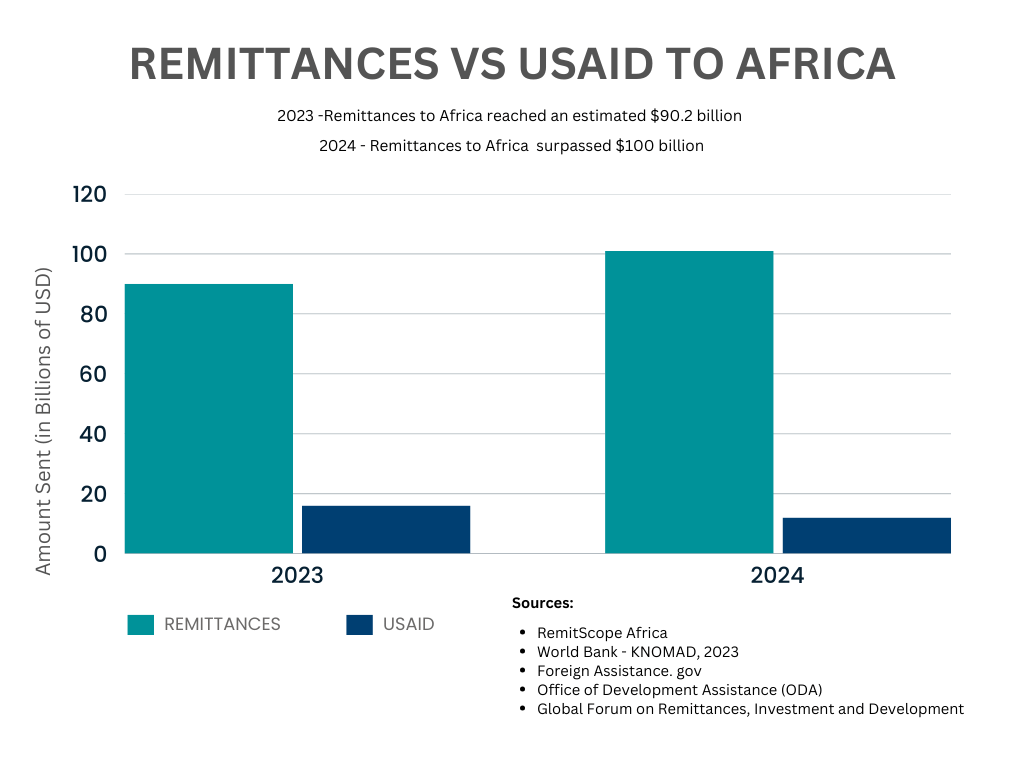
Across the continent, remittance-first companies are quietly expanding into accounts, payments, cards, and more; a clear signal that consumer remittance, despite being a $100 billion market, is not enough on its own.
What makes this shift more interesting is that it is happening from both directions;
I previously reported on how African payments giants are moving into remittance. Flutterwave launched Send. Moniepoint launched MonieWorld. In both cases, the logic was straightforward: follow African customers abroad.
Now we are seeing the reverse;
Remittance-first fintechs are moving back into payments and accounts; the same territory dominated by African unicorns like Flutterwave and Moniepoint. Different starting points, same destination. This is not confusion. It is convergence.
A few signals worth paying attention to:
LemFi recently launched USD and GBP accounts for Africans. This move quietly shifts LemFi from a diaspora-only remittance app to a payment and collection platform for Africans themselves. Remittance becomes one use case, not the product.
Nala, after launching its B2B payments platform Rafiki, has also been surveying use cases around dollar accounts for Africans. The signal is consistent: remittance alone is no longer enough.
Kredete, a fintech that helps African immigrants send money home and access credit, launched a stablecoin-backed card set to roll out across 41+ African countries. This move signals a shift beyond diaspora remittance toward serving Africans locally, putting Kredete in direct competition with card-issuing fintechs on the continent.
African payments fintechs are launching remittance products, while remittance-first fintechs are building payments and account products. Different starting points, same destination.
Maybe this is a focus test. Maybe single-product models don’t work in African fintech. Or maybe everyone is simply chasing the same prize; owning the customer relationship. Or maybe you should tell us what you think about this, on the comments below.
This Newsletter is Sponsored by Pepea; a simple way for African businesses to move money globally. Convert local revenues to USD, pay international suppliers quickly, and exchange USDT/USDC into local currencies at competitive rates. Join the waitlist